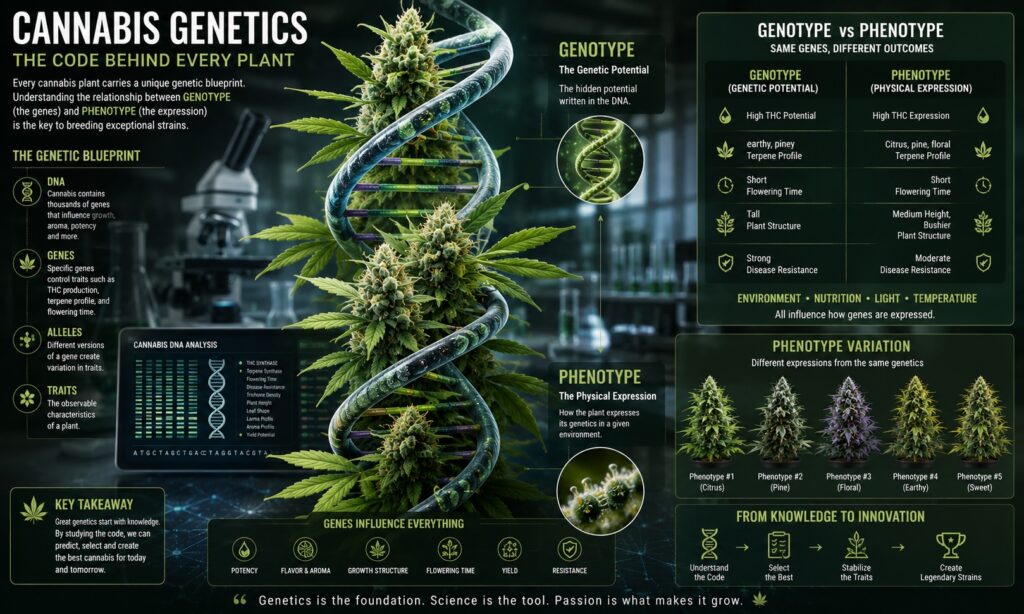
One of the most fascinating aspects of cannabis cultivation is the relationship between genotypes and phenotypes. These concepts are central to modern breeding and help explain why plants from the same seed line can sometimes display noticeable differences. For growers seeking a deeper understanding of cannabis genetics, learning how these two factors interact provides valuable insight into plant development, selection, and breeding strategies.
Modern cannabis breeding relies heavily on understanding both genetic inheritance and environmental influence. While genetics provide the blueprint for a plant’s potential, environmental conditions play a significant role in determining how that potential is expressed throughout the growing cycle.
Understanding the Cannabis Genotype
A genotype refers to the complete genetic makeup of a cannabis plant. It contains the inherited information passed from parent plants to their offspring. This genetic code influences countless characteristics, including growth patterns, structure, flowering behavior, vigor, adaptability, and many other traits.
Every seed contains a unique combination of genetic information. Even when seeds originate from the same breeding project, small genetic differences can exist between individual plants. These differences contribute to the diversity observed within a population.
For breeders, understanding genotype is essential because it determines the genetic possibilities available within a cultivar. The genotype represents what a plant is capable of expressing under suitable conditions.
Without strong genetics, even ideal cultivation environments cannot fully unlock a plant’s potential.
What Is a Cannabis Phenotype?
A phenotype is the observable expression of a plant’s genetics. Characteristics such as plant height, branching structure, leaf shape, growth speed, flowering patterns, and overall appearance are examples of phenotypic traits.
Phenotypes result from the interaction between genetics and environmental conditions. Two plants with very similar genetic backgrounds may display subtle differences if they are grown under different circumstances. Factors such as temperature, light intensity, humidity, nutrition, and root development can all influence phenotypic expression.
This is why growers sometimes encounter variation among plants originating from the same seed batch. The genetic blueprint may be similar, but environmental influences help determine how specific traits are expressed.
Phenotypes provide valuable information for both growers and breeders.
Why Phenotype Hunting Matters
Phenotype hunting is a common practice within cannabis breeding and cultivation. The process involves growing multiple plants from the same genetic line and evaluating them carefully to identify exceptional individuals.
Breeders often search for plants that display particularly desirable characteristics. These individuals may demonstrate superior vigor, structure, consistency, adaptability, or other traits that align with breeding objectives.
The information gathered through phenotype hunting helps breeders refine cultivars and improve future generations. It also allows growers to gain a deeper appreciation for the diversity that can exist within a single genetic population.
Successful phenotype selection plays an important role in the development of stable cannabis cultivars.
The Relationship Between Genetics and Environment
One of the most important concepts in cannabis cultivation is understanding that genetics and environment work together. Neither factor exists in isolation. Genetics establish the range of possibilities, while environmental conditions influence how those possibilities are expressed.
This relationship explains why cultivation practices matter so much. Even plants with excellent genetics require appropriate environmental conditions to reach their full potential. Likewise, outstanding growing conditions cannot completely compensate for weak or unstable genetics.
Growers interested in exploring modern cannabis genetics can learn more through ww.ministryofcannabis.com. Understanding the interaction between genotype and phenotype helps cultivators make more informed decisions throughout the growing process.
The most successful cultivation projects typically combine strong genetics with effective environmental management.
How Breeders Use Phenotypes and Genotypes
Modern breeding programs rely heavily on both genetic and phenotypic evaluation. Breeders observe plant performance, compare offspring, identify desirable traits, and select individuals that best represent their goals.
Advances in plant science continue improving our understanding of inheritance and trait expression. However, careful observation remains one of the most valuable tools available to breeders. Generations of selection help transform promising genetics into stable cultivars.
Additional information regarding cannabis cultivation and growing techniques can be explored through https://www.cannaweed.com/guide-culture-cannabis/.
The combination of genetics, observation, and selection remains at the heart of successful cannabis breeding.
Final Thoughts
The science behind cannabis phenotypes and genotypes reveals why genetics play such a central role in cultivation and breeding. While genotypes provide the genetic blueprint, phenotypes represent the visible expression of that blueprint under specific environmental conditions.
Understanding this relationship helps growers make better decisions, evaluate plants more effectively, and appreciate the complexity behind modern cannabis genetics. As breeding techniques continue evolving, the study of genotypes and phenotypes will remain one of the most important aspects of cannabis cultivation.